
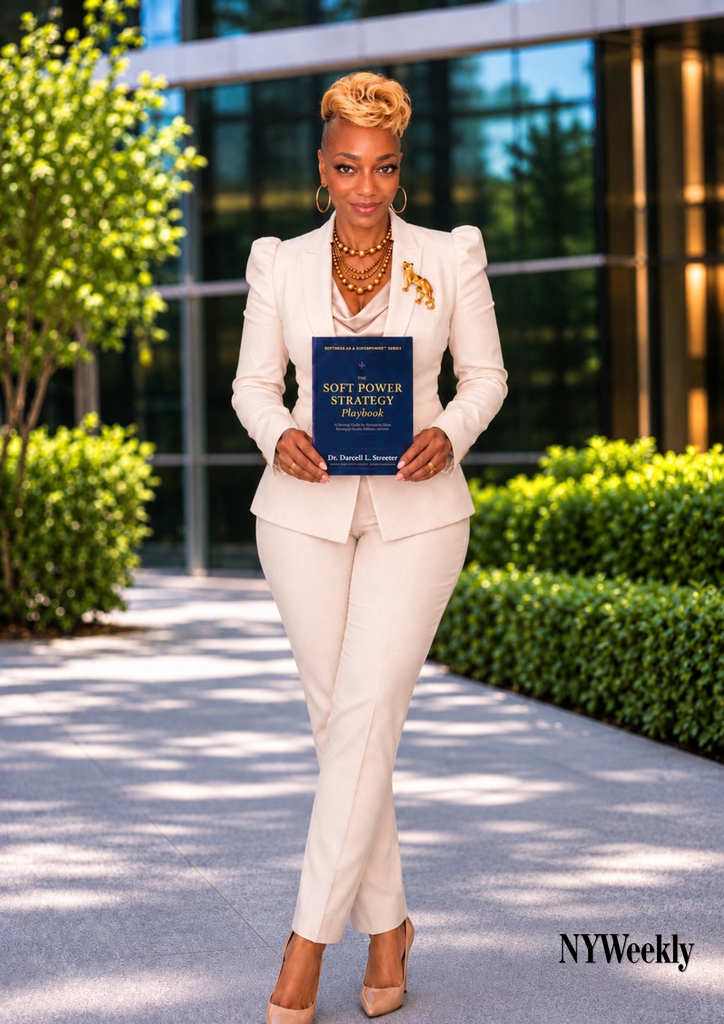
Long before she became a researcher, educator, and leadership thinker, Dr. Darcell L. Streeter learned to notice what other people overlooked.
SOME LESSONS BEGIN BEFORE WE KNOW THEIR NAMES
There are moments in life that seem ordinary when they happen.
Only later do we understand that they were preparing us for the person we would become.
For Dr. Darcell L. Streeter, one of those moments happened when she was still a child.
In fourth grade, Streeter often completed her schoolwork before her classmates. Instead of simply waiting for the rest of the class, she was given an opportunity to spend time in a special education classroom.
She encountered children who had been given different labels and were often perceived primarily through those labels.
But Streeter noticed something else.
She noticed that the students could learn.
The problem was not necessarily their ability. Sometimes, the problem was the way the lesson had been presented.
That observation stayed with her.
She did not yet know about learning sciences. She did not have a professional vocabulary for educational design. She simply understood something that would eventually become central to her life’s work.
People can be capable and still struggle when the environment around them does not allow their capabilities to emerge.
Decades later, that idea continues to influence the way Streeter approaches education, leadership and human development.
THE PERSON BEHIND THE PROCESS
Her professional journey eventually brought her into a hospital emergency room, where she worked as a registration clerk.
It may seem like an unlikely beginning for someone whose career would eventually reach into research and leadership development.
But the emergency room offered Streeter another lesson about people and systems.
She saw individuals arrive during moments of fear and uncertainty. The procedures that appeared straightforward to employees could feel completely different to someone encountering them for the first time.
A form was still a form.
A process was still a process.
But the person standing in front of the process was carrying an entirely different experience.
Streeter began to understand that effective systems cannot be judged only by how well they make sense to the people who created them.
They have to make sense to the people who depend upon them.
That distinction became a thread running through the rest of her career.
A CAREER BUILT AROUND ONE QUESTION
Over roughly twenty five years, Streeter moved through public service, corporate environments and higher education.
The settings changed.
The responsibilities changed.
The questions became more sophisticated.
But the central concern remained remarkably consistent.
What happens when a person encounters a system that was designed around institutional convenience rather than human understanding?
Her education gave her new ways to investigate the question.
Human services helped her understand the experience of being served.
Learning sciences helped her understand how people acquire and retain knowledge.
Leadership development helped her examine how people are expected to perform and grow inside organizations.
Eventually, these fields began to converge.
Streeter realized that the separation between them was not always useful.
A person cannot be understood only as a learner.
A leader cannot be understood only as a performer.
And an employee cannot be separated from the human being who arrives at work carrying an entire life with them.
THE WOMAN WHO IS CALLED BEHIND
One of the people who continues to motivate Streeter is the woman who has been made to believe that she is behind.
Sometimes she is a learner.
She may speak several languages but be considered a beginner because she is new to one particular environment.
She may have years of experience but find herself underestimated because her previous knowledge does not fit neatly into the categories of the institution she has entered.
Sometimes that woman is a professional.
She may have reached a position of responsibility and still feel that she must keep moving because slowing down might make her appear less ambitious.
Streeter recognizes both experiences.
One she has spent years designing alongside.
The other she has experienced herself.
That combination gives her work a personal dimension.
Her research is academic, but the questions behind it are deeply human.
Who gets recognized as capable?
Who gets overlooked?
Who is expected to adapt?
And what would happen if we redesigned the environment instead?
WHY THE PAUSE MATTERS
Modern culture often rewards speed.
People are encouraged to respond immediately, make decisions quickly and remain constantly available.
Streeter has learned to question that rhythm.
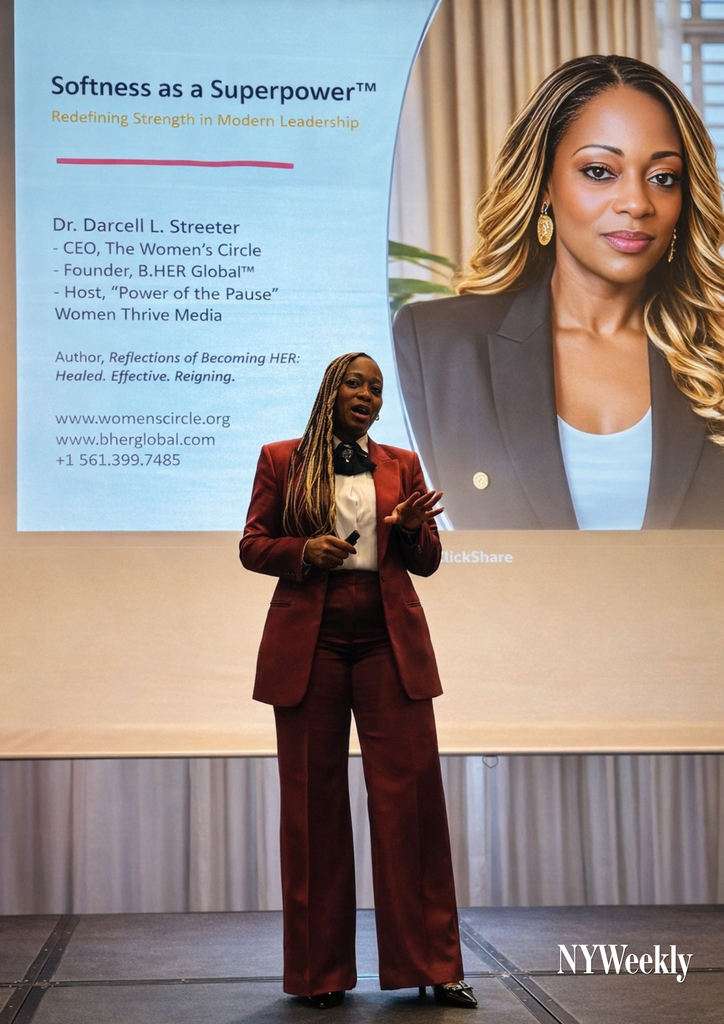
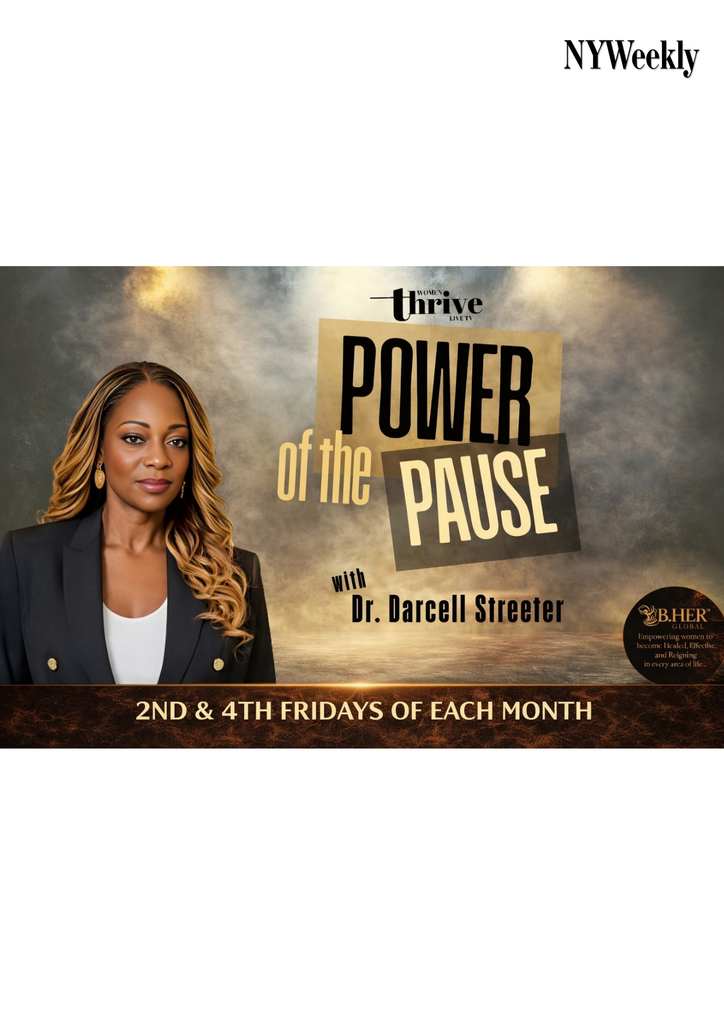
Her work around Softness as a Superpower and PAWS explores the role of pause in leadership and development.
The concept begins with a simple recognition.
People need time to process.
Learning requires attention.
Good decisions require reflection.
And meaningful transformation rarely happens simply because someone has been told to change faster.
Streeter’s perspective does not suggest that ambition should disappear.
Instead, it asks whether ambition can exist without exhaustion becoming its price.
That question has become increasingly relevant for leaders who are expected to navigate constant change.
Sometimes moving forward requires movement.
Sometimes it requires stopping long enough to understand where you are going.
WHEN LEARNING BECOMES SOMETHING YOU KEEP
For Streeter, the most meaningful form of learning is not the kind that produces an immediate performance.
It is the kind that stays.
She uses the concept of transfer to describe this idea.
A learner may perform successfully in a classroom or workshop, but that performance alone does not demonstrate lasting development.
The stronger evidence appears later.
Can the person use the knowledge in a new situation?
Can they solve a problem that was never part of the original lesson?
Can they make a decision without someone standing beside them?
That is where learning becomes capability.
And capability is what Streeter wants to build.
Her definition of success has therefore moved away from visibility.
Awards and recognition have their place, but they are not her primary measure.
She is more interested in what continues when she is no longer in the room.
CREATING SPACES WHERE PEOPLE FEEL SEEN
Perhaps the most meaningful feedback Streeter receives comes from the people she serves.
They tell her that she is genuine.
They describe feeling illuminated rather than measured.
For Streeter, those words carry significance beyond personal appreciation.
They speak to the environment required for learning.
A person who feels constantly judged may become focused on protecting themselves.
A person who feels safe enough to participate can become more willing to ask questions, experiment and grow.
Trust therefore becomes part of the learning process.
This is one of the quieter ideas within Streeter’s work, but also one of the most important.
People do not develop simply because information is available.
They develop when the conditions around them allow development to happen.
A FUTURE WHERE GENERATIONS LEARN TOGETHER
That philosophy is taking shape in Circle Forward, her Global Life and Learning Hub.
The initiative brings together two worlds that are often kept apart.
K through 12 STEAM education and adult vocational development become part of the same broader learning ecosystem.
The concept challenges the assumption that education has a beginning and an ending.
A teenager can have something to teach an adult.
An adult can have something to teach a teenager.
Experience and innovation can sit at the same table.
Streeter’s vision includes regional hubs planned for West Africa, Latin America and Southeast Asia.
The vocational pathways are designed with a changing economy in mind, particularly as automation continues to reshape the workplace.
But there is another ambition behind the project.
Streeter wants women to have access to global economic opportunity without having to abandon their communities to find it.
That means education becomes more than preparation.
It becomes a bridge.
A DIFFERENT IDEA OF PROGRESS
There is something quietly consistent about Streeter’s career.
She has moved through different institutions and disciplines, but she has continued returning to the same fundamental concern.
People should not have to become experts in a system before the system learns how to serve them.
That principle applies to classrooms.
It applies to workplaces.
It applies to leadership.
It applies to technology.
And it applies to the future.
As artificial intelligence becomes increasingly present in the systems people use every day, Streeter’s work asks us to look beyond what technology can accomplish and consider how people experience it.
A system can be advanced and still feel inaccessible.
A process can be efficient and still leave someone behind.
A workplace can be productive and still fail to help its people grow.
Progress, in Streeter’s view, has to mean more.
THE WORK THAT CONTINUES
Dr. Darcell L. Streeter’s story is not simply about a career that moved from one professional stage to another.
It is about a question that became clearer with every stage.
She first noticed it as a child watching students struggle with lessons that did not seem designed for them.
She encountered it again in a hospital, watching frightened people navigate unfamiliar systems.
She explored it through education, research and leadership.
And today, she is carrying the question into the future of learning and work.
How do we create systems that recognize the human being before they measure the performance?
There may never be one final answer.
The world keeps changing.
Technology changes.
Work changes.
Education changes.
People change.
That may be precisely why Streeter’s work matters.
She is not trying to create one permanent solution for a changing world.
She is encouraging people to keep asking better questions.
To look again.
To listen more carefully.
To notice the person behind the label.
And sometimes, to slow down long enough to see what was there all along.
For Dr. Darcell L. Streeter, that may be the beginning of meaningful change.
Not simply teaching people how to fit into the world as it is, but helping create environments where more people can discover what they are capable of becoming.